The IAEG Field School in the Himalaya
A two-week field course in engineering geological mapping in the mountains of central Nepal, for PhD students, young researchers and practitioners. The first School will be held in April 2027.
Up to 25 places. Applications are reviewed by the instructors. After 2027 the School will run every November.
Organised by
 NSEG
Nepal Austrian National
Group of IAEG
 Italian National
Group of IAEG
About the School
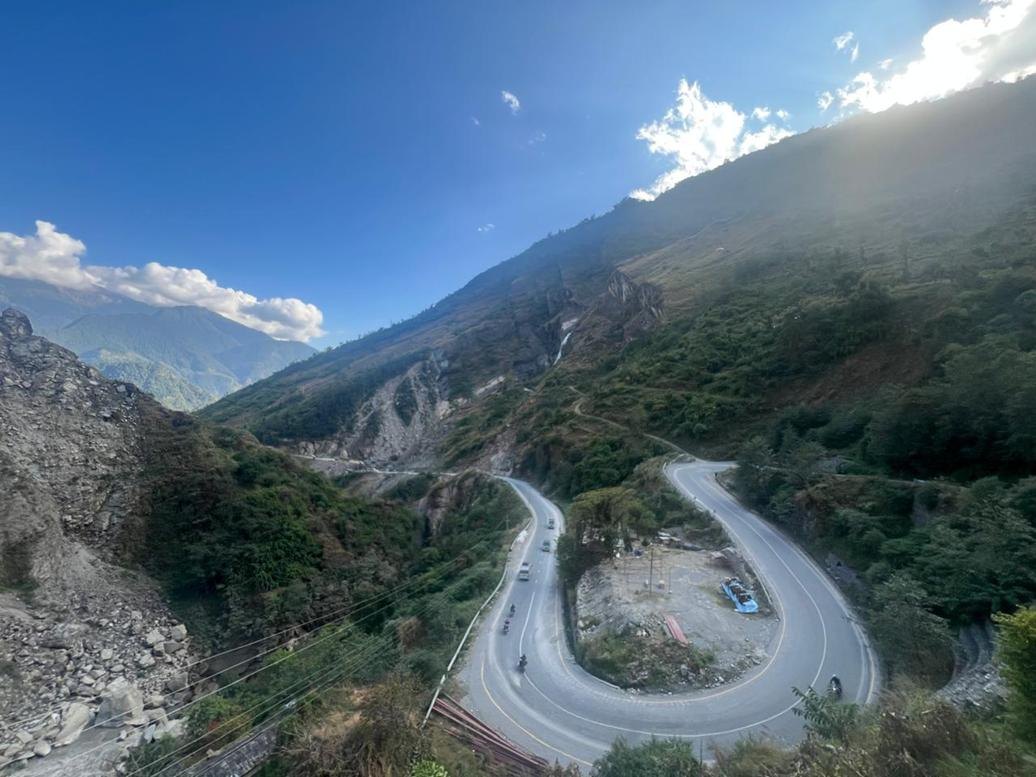
Reliable engineering geological mapping is the foundation of safe design. Yet the field investigation skills of new generations of geologists and geotechnical engineers are not always adequate to characterise ground conditions in geologically complex, hazard-prone mountains, and funding limits mean most universities can offer only short field trips.
This is the first international, field-focused engineering geology school of its kind in the Himalaya. What participants learn here applies to high mountain regions across Asia and beyond, particularly where low-cost, sustainable approaches are needed to assess hazards and protect communities and infrastructure.
Why Nepal
Active geology
Complex tectonics, high seismicity and recurring hazards, including disaster chains such as glacial lake outbursts, co-seismic landslide damming and breach floods.
Roads, water and hydropower
Geological and fluvial hazards affect roads, water supply and hydropower, and make designing and building new, safe infrastructure a real challenge.
Good exposures
Excellent rock exposures and active landslides and erosion along roads, famous trekking routes and heritage sites such as Muktinath Temple.
Objectives
Field mapping practice
Problem-solving engineering geological mapping projects in the field.
Local-scale mapping
Observation, data collection strategy, interpretation and mapping at about 1:5,000 in tectonically active terrain.
Remote sensing and fieldwork
Integrate modern remote sensing with field-based mapping to assess natural hazards.
Interdisciplinary teamwork
Application-based projects shared by geologists, geotechnical engineers and geomorphologists.
Learning in small groups
Groups of 5–6 participants, each mentored by School instructors.
Networking
Connections for knowledge exchange and career growth across the IAEG community.
Field areas
The field areas cross the Lesser Himalaya, Higher Himalaya and Tibetan-Tethys Himalaya in Gandaki Province, so every stop brings different rocks, climate and processes.
Stop 1, days 1–4
Pokhara & Naudanda
A large, deep-seated creeping landslide affecting a village and its roads: hazard assessment and mitigation.
Stop 2, days 5–6
Tatopani
Regional geology and setting of the middle Kali Gandaki valley, with half-day mapping exercises.
Stop 3, days 6–8
Lete
Huge-volume diamictons of landslide and glacial origin: telling them apart, and what they mean for instability and erosion.
Stop 4, days 9–12
Jomsom, Jharkot and Muktinath
Deep-seated landslides, slope deformation, glacial landforms, landslide dams and lake deposits.
Instructors
CZ
Christian Zangerl
BOKU University, Austria
JW
Janusz Wasowski
CNR-GEO, Italy
RD
Ranjan Kumar Dahal
Tribhuvan University, Nepal
SH
Shuichi Hasegawa
Kagawa University, Japan
MT
Manita Timilsina
[Affiliation]
CM
Chris Massey
[Affiliation]
SC
Simon Cox
[Affiliation]
HW
Hans Weidinger
[Affiliation]
TD
Tom Dijkstra
[Affiliation]
MF
Monique Fort
[Affiliation]
Registration fee
USD 1,000
Young IAEG members from low- to middle-income countries
USD 2,500
Participants from high-income countries
3+ places
For Nepali participants, fully funded by NSEG
Accommodation, meals, field transport, safety gear and course materials are included. International travel and personal insurance are not.
Important dates
| Applications open | [DATE] |
| Application deadline | [DATE] |
| Selection completed | 5 months before start |
| School in Nepal | April 2027 [DATES] |
From 2028, the School runs every year in the first half of November.
Organised by three IAEG National Groups
Nepal Society of Engineering Geology (NSEG)
Nepali National Group of IAEG, host and Secretariat
Prof. Dr. Ranjan Kumar Dahal, Tribhuvan University
Group of IAEG
Austrian National Group of IAEG
with BOKU University, Vienna
Prof. Dr. Christian Zangerl, BOKU University
Italian National Group of IAEG
with CNR-GEO, Italy
Dr. Janusz Wasowski, CNR-GEO
Supported by

IAEG China National Group

Japan National Group of IAEG (JSEG)

Chinese Taipei Regional Group of IAEG

Bangladesh National Group of IAEG
Pakistan National Group of IAEG

Bhutan National Group of IAEG
International Consortium on Geodisaster Reduction (ICGdR), Japan
Apply for the 2027 School
There are up to 25 places.